




Artificial Intelligence is transforming energy management at an unprecedented pace, positioning itself as a crucial driver of sustainability in 2026. Autonomous AI energy management systems are now capable of optimizing renewable power distribution in real-time, intelligently controlling distributed assets such as electric vehicle chargers and HVAC systems. These systems also predict maintenance anomalies in grid infrastructure, enhancing reliability and efficiency. Alongside AI, innovations like long-duration energy storage solutions—including flow batteries and thermal storage—are bridging gaps in renewable energy supply, enabling continuous clean energy availability for critical infrastructures like data centers. Next-generation batteries, such as lithium-sulfur and solid-state types, are enhancing electric vehicle range and performance, accelerating the adoption of sustainable transport. Additionally, 2026 introduces updated green building standards focusing on resilience, energy electrification, and low-emission materials, all contributing to the broader goal of reducing carbon footprints effectively.
Did You Know?
By 2026, autonomous AI energy systems will manage up to 40% of renewable power distribution in smart grids, optimizing efficiency and reducing carbon footprints.
Source: IMD Sustainability Trends 2026
AI-Enabled Energy Management Systems
AI-enabled energy management systems are poised to redefine how energy distribution and consumption are optimized across diverse sectors by 2026. These systems harness autonomous AI agents that continuously self-optimize renewable power flows and distributed energy assets, driving unprecedented efficiency and sustainability.
At the core of their operation is autonomous optimization, where AI algorithms independently analyze grid conditions, load demands, and renewable generation to dynamically balance energy supply. This ensures maximized use of clean energy and minimizes reliance on fossil sources. Simultaneously, real-time management capabilities allow these platforms to monitor and control distributed assets, including electric vehicle (EV) chargers and heating, ventilation, and air conditioning (HVAC) systems, adapting electrical loads instantly for peak efficiency.
Predictive maintenance stands out as another vital feature. These systems use advanced machine learning and AI-based anomaly detection models to predict equipment failures and flag maintenance needs before breakdowns occur. This proactive approach enhances grid reliability and reduces downtime, offering significant cost savings.
Leading solutions available in 2026 illustrate how these capabilities manifest in practical deployments. AutoGrid Energy offers high scalability for enterprise and utility-grade applications with cloud-based dashboards facilitating autonomous optimization and rigorous asset management. Siemens EnergyIP focuses on commercial-scale use, integrating machine learning models to underpin predictive maintenance within its integrated analytics platform. Meanwhile, Honeywell Forge combines advanced diagnostics with mobile and desktop applications, targeting industrial and utility sectors for deep operational insights.
The adoption and performance levels of these systems reflect their growing market importance. Data from 2026 shows AutoGrid Energy leading with an 82% adoption and satisfaction metric, followed by Siemens EnergyIP at 75%, and Honeywell Forge with 68%. These figures highlight the rapid uptake in industries prioritizing sustainable energy solutions while balancing performance objectives across complex infrastructure.
Scalability remains a key differentiator in today's solutions, allowing AI energy management systems to be tailored for residential, commercial, and industrial environments. This flexibility enables comprehensive energy efficiency improvements—from smart homes to large utility grids—accelerating the transition to a more sustainable energy ecosystem. User interfaces continue evolving as well; cloud-based dashboards, integrated analytics platforms, and versatile mobile apps ensure operators can access critical data and controls anytime, anywhere.
Ultimately, AI-enabled energy management represents a foundational technology for achieving 2026 sustainability goals. Through autonomous optimization, real-time control, and predictive maintenance, these systems enhance renewable integration, optimize energy use, and reduce operational risks. Their continued advancement will be instrumental in supporting cleaner, smarter energy infrastructure globally.
Long-Duration Energy Storage Solutions
Long-duration energy storage (LDES) is critical to overcoming the intermittent nature of renewable energy sources like solar and wind. Technologies such as flow batteries and thermal storage systems extend energy discharge times to several hours, supporting grid stability and continuous clean energy supply. These multi-hour storage solutions bridge gaps when renewables are unavailable, enabling 24/7 clean firm energy (CFE) for sensitive applications including data centers and critical infrastructure.
Flow batteries, notably vanadium redox flow types, offer reversible chemical reactions that can store and deliver energy over extended periods without significant degradation. These batteries stand out for their scalability and ability to discharge over 10 hours or more. Thermal storage systems complement this by storing excess renewable energy in heated materials or fluids, which can later be converted back to electricity on demand. This method is gaining traction for grid-scale applications due to its high efficiency and material abundance.
The commercial viability of LDES is advancing rapidly with a growing number of pilot projects demonstrating real-world feasibility. Companies like ESS Inc. and Redflow are pioneering flow battery deployments, while thermal storage firms such as EnergyNest are proving the economics of heat-based storage solutions at large scales. These pilots underline the potential for LDES to significantly reduce reliance on fossil fuel peaker plants and enhance renewable energy penetration.
Renewable energy generation depends heavily on the availability of reliable storage to maintain supply during non-sunny or non-windy periods. By enabling multi-hour energy retention, LDES systems effectively smooth output fluctuations, increasing the operational value of renewables and minimizing curtailment. This synergy is particularly vital for regions targeting carbon neutrality by 2030 and beyond.
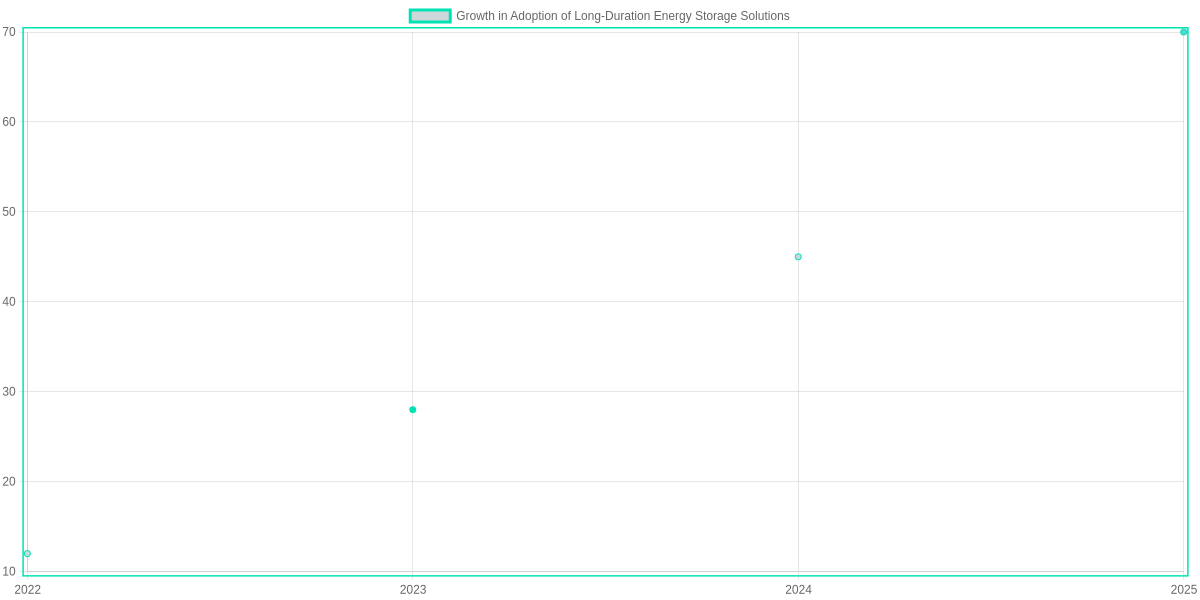
Market trends show increasing interest and investment in LDES technologies. Adoption rates have accelerated from modest levels in 2022, with pilot and early commercial projects scaling swiftly. Industry analysts forecast substantial capacity additions over the next several years as technical performance improves and costs decline.
Long-Duration Energy Storage Technologies
Bridging renewable energy gaps with multi-hour storage solutions ensures reliable clean energy.
- ✓ Flow batteries enabling multi-hour discharge
- ✓ Thermal storage for grid-scale applications
- ✓ Commercial pilot projects advancing viability
Next-Generation Batteries
The landscape of energy storage in 2026 is seeing remarkable advancements with next-generation batteries like lithium-sulphur and solid-state designs offering transformative improvements over traditional lithium-ion technology. These new batteries promise substantial gains in energy density, safety, and charging speed, which are critical for accelerating the adoption of electric vehicles (EVs) and sustainable transport solutions.
Lithium-sulphur batteries, exemplified by products such as Sion Power’s Licerion®, deliver an energy density between 350 to 400 Wh/kg. Although still in pilot stages, these batteries offer the potential for up to a 50% increase in EV range compared to conventional lithium-ion. The technology is moderately complex to manufacture and features enhanced thermal stability, making it less prone to overheating or fire risks.
Solid-state batteries, such as those developed by QuantumScape, push these figures even further, boasting an energy density above 400 Wh/kg. Their inherent solid electrolyte design drastically improves safety by eliminating flammable liquid electrolytes. With faster charge times of around 15 minutes and cycle lives exceeding 1,000 cycles, solid-state batteries are scaling into select EV models in 2026, enabling up to a 60% range increase for vehicles.
Hybrid lithium metal batteries from companies like SolidEnergy Systems provide even higher energy densities—up to 450 Wh/kg—along with enhanced range benefits reaching up to 70%. These batteries combine lithium metal anodes with traditional cathodes, alongside advanced thermal management systems to mitigate safety concerns. Early commercial availability in 2026 is helping to propel EV performance and durability forward.
Performance improvements in EV battery technology translate directly to more practical, longer-range vehicles with shorter charging times, making electric transport more accessible and appealing. As production volumes grow, scalable manufacturing approaches will bring down costs, allowing these innovations to reach mass-market adoption. This transition supports global sustainability goals by reducing greenhouse gas emissions from transport sectors.
Looking ahead, these next-generation batteries are paving the way for a future dominated by clean, efficient, and sustainable transport. Enhanced battery performance supports not only passenger vehicles but also commercial fleets and public transit electrification. Combined with AI-enabled energy management systems, these breakthroughs will underpin resilient, low-emission transport networks essential for meeting ambitious climate targets.
Research & Development
Innovate lithium-sulphur and solid-state battery technologies to enhance energy density and safety.
Prototype Testing
Validate battery performance improvements under real-world EV and renewable conditions.
Integration in Electric Vehicles
Deploy advanced batteries to extend EV range and durability, reducing reliance on fossil fuels.
Scalable Manufacturing
Adopt cost-effective production strategies to bring next-gen batteries to mass markets.
Sustainable Transport Boost
Accelerate transition to low-emission vehicles with better performing, longer-lasting batteries.
| Feature | Sion Power Licerion® Lithium-Sulfur | QuantumScape Solid-State Battery | SolidEnergy Systems Hybrid Lithium Metal Battery |
|---|---|---|---|
| Energy Density (Wh/kg) | 350-400 | >400 | 450 |
| Charge Time | ~30 minutes | 15 minutes | 20 minutes |
| Cycle Life | <500 | 1000+ | 500-800 |
| Commercial Availability | Pilot stage 2026 | Select EV integration 2026 | Early commercial 2026 |
| Safety Enhancements | High thermal stability, less flammable | Inherent solid electrolyte stability | Advanced thermal management |
| Vehicle Range Impact | Up to 50% range increase vs. Li-ion | Up to 60% range increase | Up to 70% range increase |
| Manufacturing Complexity | Moderate | High | Moderate |
2026 Green Building Standards
The 2026 green building landscape is evolving with an emphasis on performance-based pathways, resilience, and sustainability. Leading standards such as the 2026 Enterprise Green Communities Criteria Checklist and Florida Green Building Coalition Standards 2026 highlight the transition towards energy electrification and rigorous low-emission material requirements. These standards prioritize measurable outcomes, steering projects beyond prescriptive checklists into real-world sustainability results.
Low-emission materials are at the core of these frameworks, addressing carbon footprints, VOC emissions, and the use of recycled or locally sourced content. This shift ensures buildings not only minimize their environmental impact during construction but also enhance indoor air quality and long-term occupant health. Rigorous material criteria across these standards encourage innovation while pushing manufacturers toward greener production methods.
Performance-based pathways mark a significant evolution in how compliance and sustainability are assessed. For example, the Florida Green Building Coalition Standards apply outcome-based resilience metrics, including climate adaptation and backup power. LEED v5 introduces new credits for innovative sustainable technologies and net-zero energy designs, reflecting an integrated approach to environmental goals. These pathways leverage continuous monitoring and data analytics, enabling dynamic optimization over a building’s lifespan.
Integrating AI-enabled energy management systems complements these standards by optimizing energy distribution and predictive maintenance in real time, enhancing building operations. This synergy equips projects to meet stringent 2026 criteria effectively while maintaining resilience against climate challenges.
5-Step Workflow for 2026 Green Building Standards
Assessment
Evaluate current building performance and material emissions.
Planning
Design with energy electrification and low-emission materials in mind.
Implementation
Apply performance-based sustainability pathways.
Monitoring
Continuously track efficiency, resilience, and compliance.
Optimization
Use AI and technology to optimize building operations.
| Feature | 2026 Enterprise Green Communities Criteria | Florida Green Building Coalition Standards 2026 | LEED v5 (Proposed 2026) |
|---|---|---|---|
| Focus | Affordable housing energy & sustainability | Performance-based resilience & electrification | Whole-building sustainability & emissions reduction |
| Material Standards | Strict low-emission & recycled content | Emphasis on low-emission & local sourcing | Stricter VOC and carbon footprint limits |
| Energy Requirements | Mandates energy electrification & renewables | Strong push for resilience & backup power | Incentives for net-zero energy designs |
| Performance Pathways | Score-based compliance with monitoring | Outcome-based with resilience metrics | Credits for innovative sustainable technologies |
| Resilience Criteria | Moderate, focused on affordable housing | Extensive, including climate adaptation | Integrated in energy and structural design |
Comparing Innovations: Energy Systems vs. Storage
Energy innovations in 2026 prominently feature the intersection and divergence of AI-enabled energy management systems and advanced long-duration energy storage solutions. Both categories play critical, complementary roles in achieving sustainable energy goals, yet they address distinct challenges in the energy ecosystem.
AI-enabled energy management systems such as AutoGrid's AI Energy Platform utilize autonomous algorithms to optimize renewable power distribution dynamically. These systems manage distributed assets—including electric vehicle (EV) chargers and HVAC units—in real-time to maximize clean energy utilization. A key advantage lies in their predictive maintenance capabilities, which detect potential failures within grid infrastructure before outages occur, enhancing reliability and reducing costly downtime. This continuous, intelligent control enables grids to adapt to fluctuating renewable inputs without sacrificing performance.
In contrast, long-duration energy storage solutions like the ESS Inc. Flow Battery and emerging thermal storage technologies provide tangible energy reserves that bridge gaps when renewable generation is insufficient, such as during nighttime or overcast conditions. These storage systems support clean firm energy (CFE) demands by storing excess renewable energy and dispatching it over multi-hour periods. While AI systems optimize energy flow instantaneously, storage technologies physically retain energy to maintain grid stability and supply continuity, crucial for data centers and critical infrastructure.
Examining these innovations reveals their differentiated technical characteristics. AI platforms focus on system-wide optimization rather than energy density, operating continuously with autonomous control features. Storage technologies, by comparison, provide capacity quantified in watt-hours per kilogram, with solutions like QuantumScape’s solid-state battery delivering significantly higher energy densities for applications such as EVs. Operational durations also differ: flow batteries can store and deliver energy up to 12 hours, whereas solid-state batteries offer shorter discharge times but excel in safety and longevity.
The market distribution further reflects these roles. AI-enabled management systems account for approximately 42% of innovation focus in 2026 energy deployments, underscoring their vital role in grid optimization. Long-duration storage solutions represent about 33%, reflecting their growing commercial pilot presence as dependable clean energy reservoirs. The remaining 25% is attributed to next-generation battery technologies advancing EV and renewable integration with improved performance and safety.
Together, these innovations form an integrated approach to modern energy challenges: AI systems enhance operational efficiency and asset coordination in real time, while storage solutions provide the essential energy buffering needed to achieve resilient, 24/7 sustainable power supply. This synergy is shaping the future grid architecture, bridging variability in renewable generation with optimized, intelligent management.
Frequently Asked Questions
What are AI-enabled energy management systems? In 2026, these systems deploy autonomous AI agents to optimize the distribution of renewable energy dynamically. They manage distributed assets like electric vehicle chargers and HVAC systems in real-time while predicting maintenance anomalies in grid infrastructure to improve overall efficiency and reliability.
How do long-duration energy storage solutions work? Technologies such as flow batteries, thermal storage, and perovskite-tandem solar cells store excess renewable energy for multi-hour durations. This capability enables 24/7 clean firm energy, supporting critical applications like data centers and stabilizing power grids with uninterrupted sustainable energy.
What is the future of green building standards? Standards like the 2026 Enterprise Green Communities Criteria and Florida Green Building Coalition Standards are advancing green building practices. They emphasize performance-based pathways, resilience, full electrification of energy use, and the adoption of low-emission construction materials to meet stringent 2026 sustainability goals.
What are AI-enabled energy management systems? ▼
How do long-duration energy storage solutions work? ▼
What is the future of green building standards? ▼
Conclusion
AI-enabled energy management systems like those optimizing EV chargers and HVAC units are revolutionizing renewable power distribution by enhancing real-time grid resilience. Long-duration storage technologies, including flow batteries and thermal solutions, bridge gaps in renewable generation, enabling continuous clean energy supply. Breakthroughs in next-generation batteries—such as lithium-sulphur and solid-state—are pushing electric vehicle range and performance forward, accelerating sustainable transport. Meanwhile, 2026’s updated green building standards emphasize energy electrification, resilience, and low-emission materials, supporting sustainable urban development. Together, these innovations form a cohesive energy ecosystem essential for scaling sustainability efforts in the coming years. They are not just technological milestones but critical pillars for a resilient, carbon-neutral future.
🎯 Key Takeaways
- → AI-enabled energy management systems optimize renewable energy usage and grid resilience in real-time.
- → Long-duration energy storage solutions like flow batteries support 24/7 clean energy reliability.
- → Next-generation batteries improve EV range and renewable integration.
- → Updated 2026 green building standards promote energy electrification and low-emission materials.
- → Together, these innovations are critical to achieving scalable, sustainable energy futures by 2026 and beyond.
.jpg&w=256&q=75)