




Technology in 2026 is set to revolutionize our world with groundbreaking advancements that promise to reshape industries and daily life. Key trends include seamless AI integration into enterprise infrastructure, accelerating the shift toward intelligent, autonomous systems. Quantum computing breakthroughs will unlock new potentials in data processing, while robotics equipped with world models enhance decision-making capabilities. The emergence of sovereign AI ecosystems and Cloud 3.0 architectures reflect a shift toward decentralization and increased security. Energy innovations, particularly small modular reactors (SMRs) and sodium-ion batteries, are poised to deliver cleaner, more efficient power solutions. This blog explores these top technology trends shaping the future, offering insights into how they will impact businesses, technology adoption, and innovation strategies in the coming years.
Did You Know?
By 2026, AI integration is expected to power over 70% of enterprise infrastructure globally, transforming how businesses operate.
Source: Tech Trends 2026 Report
AI Integration in Enterprise Infrastructure
Artificial Intelligence is becoming central to the modernization of enterprise infrastructure in 2026. Organizations are embedding AI technologies deep into their systems to drive smarter operations, reduce costs, and create more agile business models. This integration is particularly critical as companies face escalating data volumes and competitive pressure for rapid innovation.
One hallmark of AI integration is its role in enhanced decision-making. AI algorithms analyze vast datasets faster and with higher precision than traditional methods, enabling executives to make informed decisions supported by actionable insights. According to IBM’s 2026 outlook, agentic AI workload chips accelerate these processes, marking a leap forward in computational efficiency.
Automation continues to be a transformative application within enterprises. Robotic Process Automation (RPA) tools are streamlining routine, repetitive tasks such as invoice processing and data entry, drastically reducing human error and increasing employee productivity. Leading video conferencing platforms like Zoom also leverage AI enhancements in their 2026 releases, improving user experience through automated noise cancellation and real-time transcription.
Predictive analytics powered by AI models allow companies to forecast market trends and customer behaviors with greater accuracy. This capability supports proactive strategy development rather than reactive problem-solving. AI-driven chatbots and virtual assistants now provide 24/7 customer support, improving engagement and satisfaction while freeing human agents for more complex inquiries.
Cloud infrastructure is evolving with AI-infused services that deliver scalable, flexible enterprise environments. Companies can dynamically allocate computing resources according to workload demands, optimizing operational costs and speed. This synergy of AI integration with cloud technologies illustrates the future of enterprise IT architecture.
Key Aspects of AI Integration in Enterprises
The following chart illustrates AI adoption rates across various enterprise functions in 2026. Data analytics leads the pack at 75% adoption, followed by customer support at 68%, signaling strong focus on customer-centric and data-driven processes. Operations automation (54%), cybersecurity (47%), and supply chain management (40%) showcase growing but comparatively nascent integration stages, revealing areas for continued AI expansion.
Advancements in Quantum Computing
Quantum computing continues to transform from theoretical promise into practical innovation as 2026 advances. Leading companies such as IBM and Google spearhead the field's development, focusing on enhancing qubit coherence and implementing sophisticated error correction protocols. These improvements directly boost quantum processor stability and computational accuracy, addressing previous limitations in the technology.
One of the most notable trends in 2026 is the emergence of specialized agentic workload chips designed to optimize quantum computing performance for specific tasks. IBM projects that such chips will be commercially relevant this year, marking a transition to more tailored and scalable quantum solutions. This transition enables more effective hybrid quantum-classical computations, where quantum devices solve complex subproblems alongside traditional systems.
The industry's efforts have increased the practical accessibility of quantum computing for enterprises, with more companies exploring quantum algorithms for optimization, cryptography, and simulations. The integration of quantum accelerators into cloud platforms not only facilitates experimental research but also pushes quantum computing toward mainstream applicability.
Advancements in quantum algorithms themselves—such as improved variational approaches and quantum machine learning techniques—are further propelling the speed and scope of problems addressable by quantum devices. Collaborative projects between tech giants and academic institutions strengthen knowledge sharing, accelerating progress on challenging quantum software problems.
Quantum Computing in 2026
Rapid advancements in qubit technology and quantum algorithms are driving breakthroughs. Key players like IBM and Google lead the innovation charge, targeting agentic workload chips by 2026.
- ✓ Improved qubit coherence and error correction
- ✓ Hybrid quantum-classical algorithms
- ✓ Growing enterprise adoption
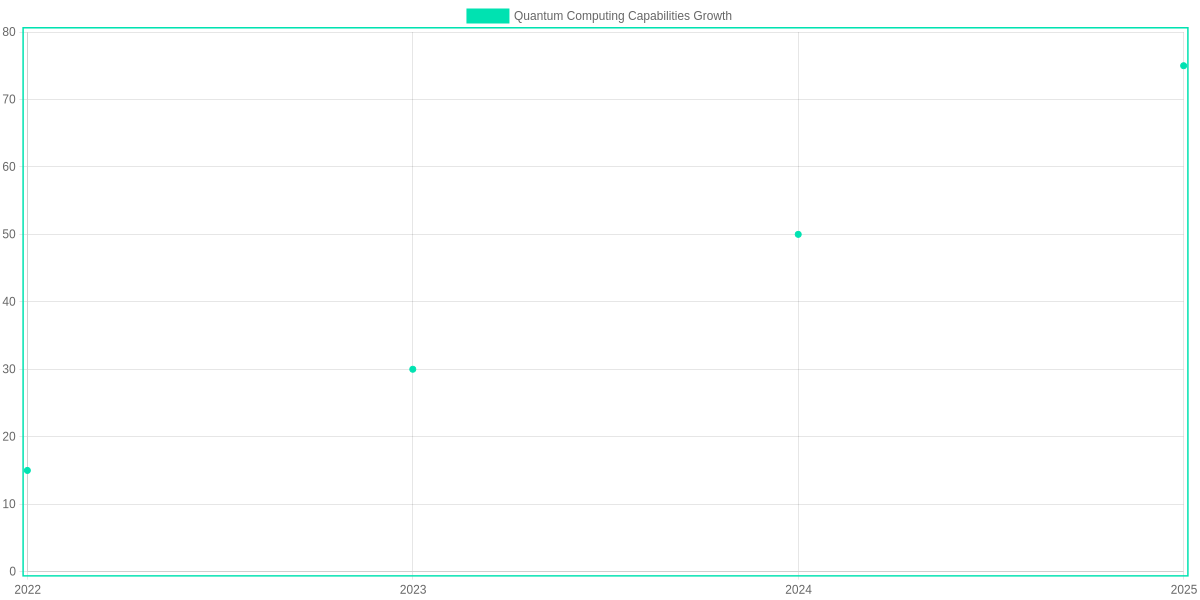
Performance metrics underscore this rapid evolution. Quantum computing capabilities have surged from an index value of 15 in 2022 to 75 in 2025, reflecting compound improvements in both hardware and software ecosystems, as well as increased commercial engagement.
The path forward points to further integration of quantum tech into enterprise-level solutions, with IBM’s focus on agentic workload chips exemplifying a shift toward specialized, efficient quantum processors. Google's advances in quantum supremacy experiments continue to push scientific boundaries, providing critical insights for future quantum architecture designs.
The Role of Robotics with World Models
World models in robotics represent detailed internal simulations that replicate the robot’s external environment. These models enable robots to understand, predict, and interact with their surroundings more intelligently. By integrating sensors, cameras, and AI, robots build dynamic, continuously updated maps of their environment, allowing for real-time decision making and adaptation.
Applications of robotics powered by world models span multiple industries. In manufacturing, collaborative robots like ABB’s YuMi use simplified world models for precise manipulation and assembly tasks, enhancing productivity and safety. Boston Dynamics’ Spot robot employs high-fidelity environmental mapping with real-time updates for autonomous inspection and delivery in complex outdoor or industrial sites. NVIDIA’s Isaac Sim provides a virtual simulation environment to develop and test robotic systems using sophisticated world models before real-world deployment.
These systems rely on a fusion of sensor data—such as lidar, stereo cameras, and inertial measurement units (IMUs)—to construct and refine their internal digital environments. The AI capabilities embedded within these platforms enable robots to plan, predict, and execute complex tasks while adapting continuously to environmental changes. For example, Boston Dynamics Spot leverages onboard AI to navigate and adapt autonomously, while NVIDIA Isaac Sim uses AI-driven simulations to prepare robots for diverse real-world scenarios.
Looking ahead, world models are set to revolutionize robotics by enabling more autonomous and intelligent agents capable of operating in unpredictable environments with minimal human intervention. Advances in real-time adaptation and learning algorithms will improve robot reliability and versatility across industries such as logistics, healthcare, construction, and defense.
Perception and Sensing
Robots gather data from their environment using sensors and cameras.
World Model Construction
Data is processed to create an internal digital model of the environment.
Decision Making
The robot uses the world model to plan and predict actions.
Action Execution
The robot performs tasks based on decisions derived from the world model.
Continuous Learning
World models are updated in real-time to adapt to changes.
| Feature | Boston Dynamics Spot | NVIDIA Isaac Sim | ABB YuMi |
|---|---|---|---|
| World Model Integration | High fidelity environmental mapping with real-time updates | Simulates complex world models for robotic testing | Integrates simplified world models for precise manipulation |
| Primary Use Case | Autonomous inspection and delivery | Robotics development and simulation | Collaborative manufacturing tasks |
| Sensor Suite | Lidar, stereo cameras, IMU | Virtual sensors in simulation | Force, vision sensors |
| AI Capabilities | Onboard AI for navigation and task adaptation | AI-driven simulation environment | Embedded AI for robot control |
| Real-time Adaptation | Yes, through continuous world model updates | Yes, via dynamic simulation scenarios | Limited, primarily pre-programmed tasks |
Sovereign AI Ecosystems
Sovereign AI ecosystems represent a shift towards AI infrastructures controlled locally by countries or regions, aimed at ensuring data sovereignty and compliance with national privacy laws. This trend empowers nations to build, deploy, and govern AI systems independently, without relying on foreign cloud providers or models vulnerable to external policies.
At the core of sovereign AI is the protection of data privacy and ownership. By keeping data within regional borders and establishing strict control over AI workloads, governments and organizations can mitigate risks around data breaches, unauthorized access, and geopolitical tensions. This approach aligns with emerging regulations such as the EU’s Digital Sovereignty initiatives and China’s emphasis on localized data governance.
Global trends reveal a growing number of countries investing in sovereign AI platforms. For example, the European Union is advancing GAIA-X, a federated cloud project focused on European data sovereignty and interoperability. Similarly, India is prioritizing indigenous AI development to reduce dependence on foreign technologies while addressing local socio-economic needs.
Implementing sovereign AI involves several key steps: establishing clear data sovereignty policies, developing AI models tailored to local cultural and regulatory contexts, and creating mechanisms for secure, privacy-preserving data sharing between entities. Transparent governance frameworks are essential to ensure AI accountability and compliance with laws. Despite the focus on localization, global collaboration remains crucial to share research insights, avoid duplication, and drive innovation.
As sovereign AI ecosystems mature, they have the potential to reshape global AI dynamics by balancing national interests with the collective advancement of artificial intelligence, offering enhanced privacy, security, and control over digital assets.
Establish Data Sovereignty
Define and enforce local data control policies to keep sensitive data within jurisdiction.
Develop Local AI Models
Create AI systems tailored to local needs, respecting cultural, regulatory, and privacy requirements.
Implement Secure Data Sharing
Enable safe and privacy-preserving data exchange between local entities and partners.
Adopt Transparent Governance
Ensure AI accountability through clear policies, auditing, and compliance mechanisms.
Promote Global Collaboration
Balance sovereignty with cross-border cooperation for innovation and AI progress.
Cloud 3.0 Architectures
Cloud 3.0 architectures represent the next evolutionary phase in cloud computing, marked by increased flexibility, intelligence, and decentralized computing capabilities. This paradigm shift is significant for organizations aiming to leverage scalable, cost-efficient, and responsive cloud infrastructure to meet demanding workloads and real-time processing needs.
The major components of Cloud 3.0 architectures include serverless computing, edge computing, and hybrid cloud models. Serverless computing enables developers to run applications without managing servers, allowing for real-time resource scaling and reducing infrastructure overhead. Edge computing brings data processing closer to data sources, which enhances performance by lowering latency and bandwidth consumption—essential for Internet of Things (IoT) deployments and real-time analytics.
Hybrid cloud models integrate private and public clouds, enabling enterprises to balance control, security, and scalability. This architecture supports diverse application needs, offering the flexibility to run sensitive workloads in private environments while leveraging the public cloud for general-purpose computing.
Serverless Computing
An architecture model where cloud providers dynamically manage the allocation of machine resources. It simplifies deployment by eliminating server management, enabling scalability.
- • Enables real-time resource scaling
- • Reduces infrastructure overhead
Edge Computing
Distributed computing framework bringing computation and data storage closer to the sources of data, improving latency and bandwidth efficiency.
- • Supports IoT and real-time analytics
- • Reduces data transfer to central servers
Cloud 3.0 is predicted to experience substantial growth in 2026, driven by increasing adoption of these architectures across industries. Serverless computing leads with approximately 40% of the market share, edging out edge computing at 35%, while hybrid cloud models account for around 25%. This distribution reflects enterprises’ diverse needs for scalability, localized processing, and hybrid deployment environments.
Energy Innovations: SMRs and Sodium-Ion Batteries
Important Insight
Small Modular Reactors (SMRs) and sodium-ion batteries are set to revolutionize energy sustainability and storage, driving cleaner and more efficient power solutions globally.
Small Modular Reactors (SMRs) represent a leap forward in nuclear energy technology. Unlike traditional large-scale nuclear plants, SMRs are compact, factory-fabricated units that can be deployed with greater speed and at lower upfront costs. Designed for enhanced safety and scalability, SMRs offer flexible power generation options that suit remote locations and smaller grids. Their modular nature supports incremental capacity increases, reducing financial risk and improving grid stability.
Sodium-ion batteries are emerging as a promising alternative to lithium-ion technology. Leveraging sodium’s abundance and lower cost, these batteries provide an environmentally friendlier and more sustainable energy storage solution. Latest advances have enhanced their energy density and charge cycles, making them competitive for use in electric vehicles and grid-scale energy storage.
Benefits of SMRs and Sodium-Ion Batteries
- SMRs: Reduced construction times, enhanced safety features, and less waste generation compared to conventional reactors.
- Sodium-Ion Batteries: Improved thermal stability, safer chemistry, and lower dependence on rare metals like cobalt and lithium.
Industry and government initiatives are increasingly investing in these technologies, anticipating a shift towards more resilient and sustainable energy infrastructure by the late 2020s. Companies working on SMR designs include NuScale Power and Rolls-Royce, while sodium-ion battery development is being led by firms such as CATL and Faradion.
The convergence of SMRs with advances in energy storage such as sodium-ion batteries could pave the way for a more flexible, carbon-neutral energy grid. As renewable sources grow, the need for reliable, scalable nuclear power and efficient storage will only intensify, positioning these innovations at the forefront of the 2026 energy transformation landscape.
Frequently Asked Questions
What are the top tech trends for 2026? Key trends focus on AI integration in enterprise infrastructure, quantum computing advances, robotics enhanced by world models, sovereign AI ecosystems, Cloud 3.0 architectures, and energy innovations such as small modular reactors (SMRs) and sodium-ion batteries.
How is AI expected to evolve in 2026? AI is advancing towards agentic workloads with emerging chips that support autonomous decision-making and improved efficiency. Companies like IBM highlight this shift as a key development for AI integration across industries.
What role will robotics play in the future? Robotics will increasingly utilize detailed world models that boost autonomy and environmental interaction. This evolution positions robotics as vital in sectors like manufacturing, healthcare, and everyday life applications.
What are the top tech trends for 2026? ▼
How is AI expected to evolve in 2026? ▼
What role will robotics play in the future? ▼
Conclusion
2026 presents transformative opportunities with AI integration enhancing enterprise workflows and quantum computing pushing computation boundaries. Sustainable advancements like small modular reactors (SMRs) and sodium-ion batteries are critical for supporting clean technology growth. The rise of Cloud 3.0 architectures alongside sovereign AI ecosystems emphasizes the importance of data sovereignty and collaboration in the digital economy.
To stay competitive, businesses should prioritize early adoption of these emerging trends and tools, such as AI-enhanced video conferencing platforms and agentic workload chips projected by IBM. Embracing innovation in hardware, cloud infrastructure, energy, and AI ecosystems will position organizations to capitalize on the rapidly evolving technological landscape.
Navigating these shifts strategically will unlock growth, resilience, and new efficiencies, ensuring readiness for the next wave of digital transformation in 2026 and beyond.
🎯 Key Takeaways
- → AI integration will drive enterprise transformation and innovation.
- → Quantum computing and advanced hardware will unlock new computational capabilities.
- → Energy innovations like SMRs and sodium-ion batteries will support sustainable tech growth.
- → Cloud 3.0 and sovereign AI ecosystems are reshaping data control and collaboration.
- → Adopting these trends early offers a competitive advantage in tech-driven markets.
.jpg&w=256&q=75)