



Sustainable technology is rapidly becoming a critical factor for small businesses striving to remain competitive and environmentally responsible. In 2026, trends emphasize low-friction, energy-efficient devices and AI-powered IoT tools designed to deliver immediate cost savings and scalable benefits without disrupting daily operations. Tools like Visionect's latest e-paper displays consume 99% less energy than traditional LCD screens, offering wireless, easy-to-install digital signage ideal for retail or office environments.
Smart thermostats and sensor-based lighting are likewise revolutionizing energy management, enabling businesses to reduce consumption by 20-30% with automatic adjustments based on occupancy. These innovations not only help curb energy use but also support sustainability goals while enhancing operational efficiency.
Did You Know?
By 2026, over 60% of small businesses adopting new technology will prioritize energy-efficient and AI-driven sustainable solutions to cut costs and reduce environmental impact.
Source: Visionect & KarbonWise 2026 Reports
Key Trends in Sustainable Technology
In 2026, sustainable technology for small businesses centers around low-friction, energy-efficient solutions that deliver immediate cost savings without operational disruption. Visionect's latest e-paper displays exemplify this trend with wireless digital signage that consumes 99% less energy than traditional LCD screens. Their plug-and-play installation and remote management enable seamless adoption across multiple sites, making them ideal for retail and office environments.
Smart thermostats and sensor-based lighting systems also lead the market by adjusting temperature and lighting automatically based on occupancy. These technologies reduce energy consumption by 20-30% right from installation, offering measurable savings via app-based monitoring. They easily replace existing equipment and scale efficiently for stores or office spaces.
IoT energy management tools, including smart plugs and real-time sensors, provide granular control over energy use, helping businesses identify areas to cut waste. This scalable technology supports continuous improvement in operational efficiency.
For agricultural small businesses, Ecozen's solar-powered irrigation and cooling solutions integrate solar energy with AI-driven IoT controls. These systems minimize diesel fuel use, reduce post-harvest losses, and generate clean energy, serving as effective models for sustainable agritech innovation.
Additionally, carbon accounting tools like Planetly automate ESG reporting, helping companies track emissions and identify reduction opportunities with minimal effort. This software ensures compliance with growing sustainability standards.
E-Paper Displays: The Future of Digital Signage
E-paper displays represent a breakthrough in sustainable digital signage tailored for small businesses seeking to reduce operational costs and energy consumption. Models like the Visionect Bora leverage e-paper technology that consumes up to 99% less energy than conventional LCD screens, providing an eco-friendly alternative without sacrificing visibility or usability.
These wireless displays offer plug-and-play installation, making deployment simple even in multi-site retail chains or office environments. Businesses can remotely update content across their network of signs, eliminating the waste of printed materials and streamlining communication efforts. This technology supports scalability while minimizing the need for technical support.
Compared to competitors such as the Dasung Paperlike HD and Onyx Boox Mira, Visionect’s solutions excel in energy efficiency and remote content management. While the Dasung model favors individual users with USB/HDMI connectivity, Onyx Boox Mira also provides wireless options but at a higher price point. Visionect Bora balances features with cost, approximately $600 per display, offering optimal value for multi-location deployment.
Ultimately, adopting e-paper signage is not only a sustainable step forward but also a cost-effective strategy for small businesses aiming to align with 2026’s tech trends. These displays contribute to lower electricity bills and reduce the carbon footprint by replacing traditional paper-based signs with smart, durable, and energy-conscious digital screens.
E-Paper Displays: Efficient, Scalable Signage
Discover ultra-low power wireless displays perfect for retail and office use. Save energy and reduce costs with easy installation and remote updates.
- ✓ Uses 99% less energy than LCDs
- ✓ Wireless and scalable for multiple locations
| Feature | Visionect Bora | Dasung Paperlike HD | Onyx Boox Mira |
|---|---|---|---|
| Energy Consumption | Uses up to 99% less energy than LCDs | Low power e-ink with minimal consumption | Ultra-low power e-ink technology |
| Installation | Wireless plug-and-play | USB and HDMI connectivity | Wireless with optional HDMI |
| Remote Content Update | Supported via cloud management | Limited remote support | Supported via app connection |
| Scalability | Designed for multi-site deployments | Best for individual use | Supports multi-device networking |
| Approximate Cost | $600 per display | $450 per display | $700 per display |
Smart Thermostats and Sensor-Based Lighting Solutions
Smart thermostats and sensor-based lighting systems have become pivotal for small businesses aiming to reduce energy consumption without sacrificing comfort or productivity. These technologies adjust environmental settings based on real-time occupancy and external conditions, yielding immediate energy savings typically between 20% and 30%. For example, Google Nest thermostats can learn business hours and temperature preferences to optimize heating and cooling, while Philips Hue and Lutron daylight sensors automate lighting to switch off when rooms are vacant.
Installation is straightforward, as smart thermostats replace existing units with minimal disruption, and sensor lighting is retrofitted into standard electrical fittings. The scalability of these solutions is a major benefit for small business owners who manage multiple locations. Once initially set up in one office or retail site, the system can be replicated efficiently with centralized control and management via apps. This centralized monitoring allows business owners to identify savings opportunities and troubleshoot remotely.
Integrating these technologies also supports corporate sustainability goals by reducing carbon footprints. The measurable energy reduction is tracked through usage analytics apps like Nest’s Energy History or Lutron's Quantum system, providing proof of environmental impact and cost savings. This data transparency is valuable for businesses that report on sustainability metrics or are considering green certifications.
Implementation Steps for Smart Thermostats and Sensor-Based Lighting
Evaluate Current Energy Usage
Assess your business's energy consumption patterns to identify high-usage areas.
Select Compatible Devices
Choose smart thermostats and sensor lighting that fit your space and budget, like Google Nest or Philips Hue.
Install and Integrate
Replace existing units with smart devices and integrate with your building management system if applicable.
Monitor and Adjust Settings
Use app-based controls to optimize settings for occupancy and time schedules.
Scale Across Locations
Easily expand systems across multiple offices or retail sites for consistent savings.
Data from 2026 indicates that sensor-based lighting adoption accounts for approximately 40% of total energy solutions implemented by small businesses, while smart thermostats contribute to about 30% in direct energy reductions. Other energy management tools fill the remaining 30%, emphasizing how these two technologies dominate the sustainable tech landscape in small commercial settings.
By investing in these scalable, intelligent solutions, small businesses can reap meaningful energy savings, demonstrate environmental responsibility, and maintain operational efficiency as they grow.
Integrating IoT Energy Management Tools
Small businesses looking to enhance energy efficiency can greatly benefit from integrating IoT energy management tools such as smart plugs and real-time monitoring systems. Smart plugs like TP-Link Kasa enable immediate control and tracking of energy consumption for individual devices, offering a plug-and-play setup that requires minimal installation effort.
Real-time monitoring platforms provide continuous visibility into energy usage across appliances and systems. Products like Sense Energy Monitor deliver whole-home or whole-business monitoring, combining AI-driven analytics with alerts to spot unusual consumption patterns—helping businesses avoid waste and high costs.
Automation is another key advantage. Tools that integrate with virtual assistants and smart home platforms allow businesses to automate power schedules, turning down heating, cooling, or lighting based on occupancy or time of day. This integration facilitates sustained energy savings with minimal manual intervention.
Expanding IoT integration at scale across multiple locations enables unified energy management and simplifies reporting. Analyzing collected data with AI helps identify further optimization opportunities. For small businesses in 2026, choosing a solution that matches installation complexity, automation needs, and budget is essential for success.
Steps to Integrate IoT Energy Management Tools
- Install Smart Plugs: Connect smart plugs to key appliances to track and control energy use remotely.
- Set Up Real-Time Monitoring: Use IoT platforms to monitor energy consumption in real time via dashboards.
- Analyze Data and Optimize: Utilize AI tools to analyze energy patterns and identify cost-saving opportunities.
- Automate Controls: Automate devices like thermostats and lighting based on occupancy and schedules.
- Scale Up Integration: Expand IoT deployment across multiple locations for unified energy management.
Comparison of Popular IoT Energy Management Tools for Small Businesses
| Feature | TP-Link Kasa Smart Plugs | Sense Energy Monitor | Emporia Vue Energy Monitor |
|---|---|---|---|
| Installation | Plug-and-play with app | Requires whole-home installation | Plug-and-play with app |
| Real-time Monitoring | Yes, via mobile app | Yes, via dedicated hub and app | Yes, via mobile app |
| Energy Usage Alerts | Customizable alerts for usage spikes | Alerts with AI predictions | Customizable alerts with historical data |
| Automation Integration | Works with Alexa, Google Assistant | Limited automation, focused on monitoring | Supports smart home platforms |
| Price Range | $15–$25 per plug | $299 for whole-home kit | $60–$80 for starter kit |
Innovations in Agricultural Technology: Ecozen Solar Solutions
Ecozen continues to push the boundaries of sustainable agricultural technology with its advanced solar-powered products designed specifically for small farms and agribusinesses. By combining renewable energy with IoT and AI, Ecozen's solutions help farmers reduce costs, minimize environmental impact, and improve operational efficiency, all while scaling to meet the needs of small-scale agricultural operations.
The Ecozen Solar Pumps have become a game-changer for irrigation in remote and small farm settings. These pumps harness solar energy to deliver efficient water supply systems without relying on diesel fuel, cutting down fuel expenses and pollution. Their portable design allows for easy relocation across varied terrains, and integrated IoT sensors provide farmers with real-time monitoring and control over irrigation schedules and pump performance. This enables precise water management that conserves resources and improves crop yields.
Complementing the irrigation solutions, Ecozen's Cold Storage Systems address a critical challenge faced by small agribusinesses: post-harvest losses. These portable solar-powered cold storage units utilize AI-driven energy management to optimize temperature controls, ensuring fresh produce remains preserved for longer periods. This reduces spoilage and waste, increasing the profitability of small-scale farmers by extending the shelf life of their products. The compact and scalable design makes it practical for smaller operations to implement cost-effective cold storage without relying on grid electricity.
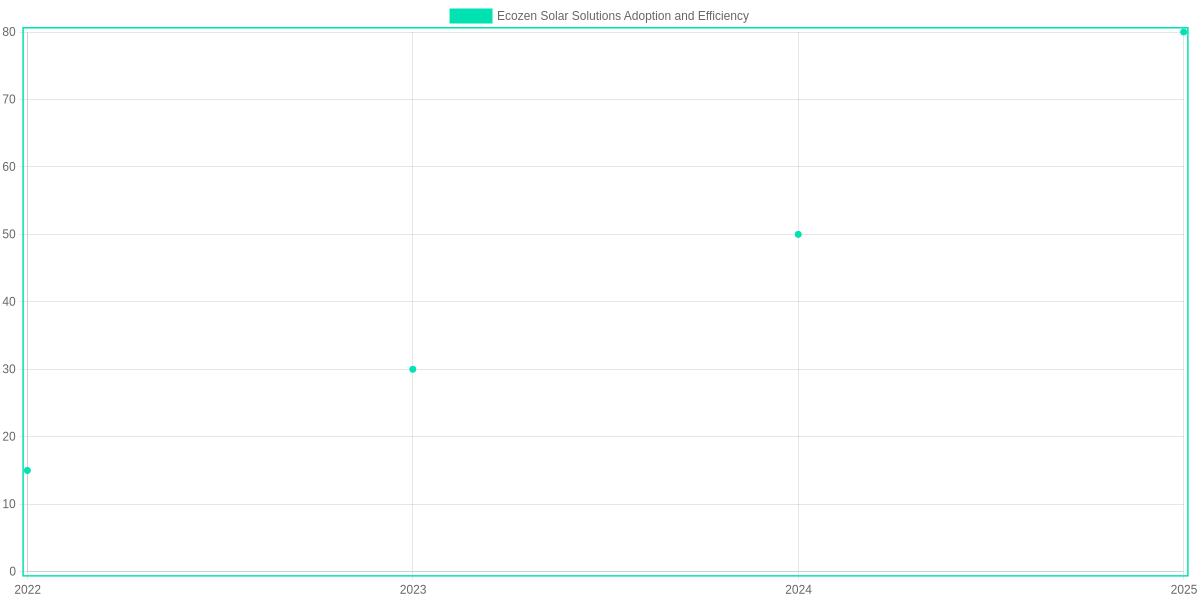
The adoption of Ecozen's solar irrigation and cooling technologies has shown robust growth over recent years. Since 2022, both adoption rates and efficiency improvements have accelerated significantly as awareness and accessibility expand among small farm communities. This trend is reflected in the rate of Ecozen solar solution deployments and positive feedback regarding reduced operational costs and sustainability benefits.
Ecozen Solar Pumps
Ecozen's solar pumps are designed for small farms, offering efficient, low-cost irrigation solutions powered by renewable energy. These pumps reduce dependency on diesel fuel, cut operational expenses, and support sustainable agriculture even in remote areas.
- Solar-powered, reducing fuel costs and emissions
- Portable design suitable for diverse terrains
- Integrated IoT sensors for real-time monitoring
Ecozen Cold Storage Systems
The portable cold storage units by Ecozen help small agribusinesses minimize post-harvest losses by preserving produce quality using solar energy. These units feature IoT-enabled temperature controls and AI-driven energy optimization to maximize efficiency.
- Solar-powered with AI-driven energy management
- Reduces spoilage and increases shelf life
- Compact and scalable for small farms
Ecozen’s innovative approach addresses key sustainability challenges faced by small farms, such as unreliable electricity access and high operational costs. Through the integration of solar power with intelligent technology, these products help build resilience and sustainability in food production chains, setting a strong example of how technology can empower small agricultural businesses globally.
Understanding Carbon Accounting and ESG Tools
Important Insight
Carbon accounting tools like Planetly empower small businesses to automate ESG reporting and identify actionable carbon reduction strategies, driving sustainability with measurable impact.
Carbon accounting is a critical component for small businesses aiming to adopt sustainability practices efficiently. It provides a clear measurement of greenhouse gas emissions, enabling targeted reductions, and aligning with environmental, social, and governance (ESG) criteria demanded by stakeholders.
Planetly stands out as a leading tool in this realm, offering comprehensive features tailored for small and medium enterprises. Its platform automates ESG reporting by collecting data from various business operations, allowing transparency and compliance without heavy administrative tasks.
Planetly’s functionalities include identifying carbon reduction levers such as energy consumption optimization, waste management improvements, and supply chain emission tracking. It also monitors environmental metrics in real-time, supporting data-driven decisions for sustainability goals.
By integrating Planetly, businesses gain actionable insights that help reduce their carbon footprint while enhancing reporting accuracy. The tool’s user-friendly interface and scalability make it suitable for diverse industries, providing ongoing support to maintain ESG commitments effectively.
Frequently Asked Questions
Small businesses in 2026 can choose from several sustainable tech options tailored to their needs. Visionect’s e-paper displays are ideal for ultra-low energy digital signage, consuming 99% less power than traditional LCDs. Smart thermostats and sensor-based lighting systems automatically adjust based on occupancy, reducing energy use by 20-30%. Additionally, smart plugs enable improved IoT energy management, while Ecozen’s solar irrigation and cooling systems support small agricultural enterprises with clean energy solutions.
Implementing these technologies is designed to be simple and non-disruptive. Devices like Visionect’s wireless displays and smart thermostats offer plug-and-play installation, requiring minimal setup. Remote management apps allow businesses to update content and monitor systems seamlessly, avoiding downtime and ensuring scalability across multiple sites.
Costs vary depending on the technology and scale of implementation. Although initial investment is required, savings are significant—Visionect displays drastically reduce electricity bills compared to LCDs, and smart thermostats provide immediate 20-30% energy savings. Furthermore, platforms like Planetly automate carbon accounting and ESG reporting, helping businesses track environmental impacts and optimize resource use, ultimately improving sustainability and financial performance.
What are the best sustainable tech options for small businesses in 2026? ▼
How can small businesses implement these technologies with minimal disruption? ▼
What are the typical costs and savings businesses can expect? ▼
Conclusion
Small businesses have an unprecedented opportunity in 2026 to embrace sustainable technology that offers both environmental and economic benefits. Visionect's e-paper displays dramatically cut energy consumption, while smart thermostats and sensor-based lighting provide immediate reductions in utility costs by 20-30%. Integrating smart plugs and IoT energy management systems enables scalable and efficient energy oversight.
For those in agriculture, Ecozen’s solar-powered irrigation and cooling solutions reduce fossil fuel dependence and boost operational resilience. Additionally, adopting carbon accounting and ESG reporting tools like Planetly streamlines sustainability efforts, positioning businesses for future compliance and stakeholder trust.
Adopting these technologies today not only enhances sustainability but also drives growth with minimal disruption. Small businesses ready to lead the way should prioritize these innovations to thrive sustainably and compete effectively in the evolving marketplace.
🎯 Key Takeaways from Sustainable Tech Trends for 2026
- → Adopt energy-efficient devices like Visionect's e-paper displays for immediate cost and energy savings.
- → Implement smart thermostats and sensor-based lighting to reduce energy use by 20-30%.
- → Utilize smart plugs and IoT systems for comprehensive energy management and scalability.
- → Explore solar-powered solutions like Ecozen's irrigation and cooling for sustainable agribusiness.
- → Leverage carbon accounting tools such as Planetly to enhance ESG reporting and reduce environmental impact.
.jpg&w=256&q=75)