
A planner once found herself on the deck of a private Halong Bay junk, watching a sunset that seemed intent on making the meeting forgettable — in a good way. That moment, caught between limestone karsts and a noisy inbox, crystallized a simple truth: Vietnam can turn routine corporate gatherings into memorable, culturally rich experiences. This guide unpacks why Vietnam matters now for the events industry, how Destination Management Companies (DMCs) make it work, and which signature venues and activities deliver impact.
1) Why Vietnam Now? Market Momentum and Opportunity
Vietnam Events Industry Market: fast growth and renewed confidence
The Vietnam Events Industry Market is moving quickly, supported by strong demand and better delivery standards across venues, hotels, and local suppliers. Current projections show the market could reach USD 1.4 trillion by 2028, with about 8% CAGR (2023–2028). This momentum matters for corporates because it signals deeper capacity: more professional teams, stronger vendor networks, and more choice across budgets.
Vietnam also stands out because it can combine business outcomes with high-impact experiences. Planners can host conferences in Hanoi or Ho Chi Minh City, then add incentive-style moments in Halong Bay, Da Nang, Hoi An, Sapa, or Hue—often within the same program.
MICE market Vietnam growth: clear numbers, stronger infrastructure
The MICE market Vietnam growth story is backed by measurable expansion. Vietnam’s MICE market size is estimated at USD 4,900.4 million in 2024 and is projected to reach USD 7,170.3 million by 2033 (about 4.32% CAGR, 2025–2033). This growth is closely linked to infrastructure upgrades and a more business-friendly approach to hosting international groups.
"Rising governmental support and experiential meetings are key drivers behind Vietnam's MICE expansion." — KPMG Vietnam
In practical terms, this means more world-class conference facilities, more luxury resorts designed for groups, and better end-to-end coordination—especially when a Destination Management Company (DMC) is used to manage permits, transport, and local supplier alignment.
Post pandemic event recovery meets Hybrid virtual events demand
Post pandemic event recovery has created pent-up demand for face-to-face meetings, incentives, and leadership offsites. At the same time, Hybrid virtual events demand remains significant as companies keep regional teams connected and extend content to remote audiences. Vietnam is well positioned for this blended model because many venues now support streaming, multi-room production, and flexible set-ups for both in-person and online participation.
"Hybrid and virtual events continue to drive market expansion as businesses invest in new technologies." — IMARC Group
- In-person impact: strong hospitality, cultural depth, and memorable settings.
- Hybrid reach: scalable formats for regional and global teams.
- Operational advantage: DMC support reduces risk in logistics and local execution.
2) The DMC Advantage: Local Knowledge, Logistics, and Savings
For Corporate events Vietnam, the biggest challenge is rarely the agenda—it is the local execution. Vietnam offers strong event venue conference facilities in Hanoi and Ho Chi Minh City, plus high-impact destinations like Halong Bay, Sapa, Hoi An, Da Nang, Mui Ne, and Hue. Yet each location comes with different supplier standards, access rules, and cultural expectations. A Destination Management Company (DMC) helps corporates navigate these details with speed and control.
"A skilled DMC transforms local complexity into a seamless guest journey — from permits to VIP access." — Mobility Foresights
Local knowledge that prevents avoidable issues
DMC teams understand Vietnamese business etiquette, timing norms, and guest expectations. This matters for everything from VIP hosting in Ho Chi Minh City to community-based activities in Sapa. They also know the local permit landscape—critical when planning offsite dinners, filming, road movements, or special access at heritage sites such as Hue’s Imperial City.
End-to-end Destination management company services
Strong Destination management company services cover the full event chain, reducing the number of vendors a corporate team must manage. This includes venue sourcing, program design, branding setup, catering, transport, entertainment, and on-ground staffing. With established local networks, a DMC can coordinate complex multi-stop itineraries—such as Hanoi meetings followed by a Halong Bay cruise and a closing dinner in Hoi An—without gaps in service.
- Expert local knowledge and cultural insights
- Customized planning aligned to business goals
- Efficient logistics (transfers, schedules, permits)
- Cost savings through negotiated supplier rates
- Exclusive experiences that elevate attendance and engagement
Logistics control and measurable savings
DMCs manage local suppliers daily, so they can secure better terms on hotels, transport, production, and F&B—often improving quality while protecting budget. They also reduce risk by confirming venue access and operational limits early, whether for a gala at the Reunification Palace or networking at Chill Skybar or Saigon Skydeck.
"Destination management company services are central to unlocking exclusive Vietnam venues for corporates." — IMARC Group
In practice, this can mean private Halong Bay cruises, curated cultural performances in Hanoi, or tailored team-building in Mui Ne dunes—experiences that are difficult to arrange remotely and easier to deliver through in-country partnerships.
.jpg)
3) Signature Venues & Activities That Elevate Events
Vietnam stands out for Experiential meetings conferences Vietnam because it pairs strong event venue conference facilities in major cities with memorable cultural and nature-based programs. A Destination Management Company (DMC) helps corporates match the right setting to the event goal—networking, team building, or incentive travel—while managing permits, timing, and supplier coordination.
UNESCO settings that add prestige and story
Halong Bay corporate events are a high-impact choice for leadership retreats and client hosting. Private cruises and overnight, jade-hulled junk experiences create natural space for conversations, small workshops, and incentive moments against a UNESCO World Heritage Site backdrop.
"Private Halong Bay cruises and French colonial mansion dinners deliver the 'wow' factor clients seek." — Mobility Foresights
For formal evenings, Reunification Palace in Ho Chi Minh City offers a historic, high-status setting for gala dinners and receptions. In central Vietnam, Hue’s Imperial City (UNESCO-listed) supports themed dinners and guided cultural programs that make the agenda feel meaningful, not generic.
"Experiential meetings and conferences in Vietnam benefit from UNESCO-listed sites and unique local crafts." — KPMG Vietnam
City “after-hours” networking with skyline energy
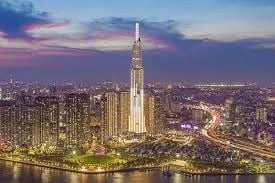
In Ho Chi Minh City, rooftop venues such as Saigon Skydeck and Chill Skybar elevate cocktail networking with panoramic views and premium service. These locations work well for sponsor moments, product showcases, and closing-night celebrations without heavy travel time.
Immersive regional activities for teams and incentives
- Sapa: guided hikes and cultural workshops for team-building in the northern mountains.
- Hoi An (UNESCO): cycling tours through heritage streets and artisan stops to encourage shared discovery.
- Hanoi: cooking classes (pho, banh xeo) and private water puppet shows for compact, high-engagement evenings.
- Mui Ne: sand dune adventures (sandboarding, ATV) for incentive groups seeking adrenaline.
- Da Nang: beach retreats at luxury resorts that balance meeting sessions with watersports and recovery time.
Used together, these venues and activities help planners design programs that feel distinctly Vietnamese while still meeting corporate standards for comfort, timing, and brand experience.
4) Practical Planning Checklist (with a couple of creative detours)
Vietnam rewards planners who work in phases. Tet is a useful model: it can drive ~20% of annual FMCG revenue, and shoppers plan around 40 days ahead. For corporate events, the same rhythm helps lock suppliers early and avoid holiday bottlenecks.
"Phase-based planning — early, core and post-event — helps align promotions and logistics around Vietnam's unique consumer rhythms." — Vietnam Briefing
Phase Early Preparation (40+ days out): lock the foundations
- Vendor selection: shortlist venues, DMC, production, transport, and F&B; confirm who owns each deliverable.
- Permits and compliance: check rules for public spaces, heritage sites, drones, amplified sound, and branded builds.
- Draft schedule: build a realistic run-of-show with travel buffers (city traffic, domestic flights, and weather windows).
- Holiday risk check: if dates touch Tet, book earlier than usual and confirm staffing plans with suppliers.
Phase Core Festive Spending: execute core logistics under pressure
This phase mirrors peak demand periods: availability tightens and prices move. The checklist below keeps delivery stable.
- Airport transfers: meet-and-greet, multilingual signage, and staggered arrivals.
- Accommodation blocks: rooming list deadlines, VIP handling, and late check-out options.
- AV and staging: power, backup microphones, interpretation, and rehearsal time.
- Local transport: coach routing, water transfers (e.g., Halong Bay), and accessibility needs.
- Contingency plans: rain plans for outdoor dinners, alternate venues, and permit fallbacks.
Phase Post Tet Consumption: extend value for rewards and retention
Post-holiday behavior often shifts to self-reward. For incentives, this phase supports add-on experiences (spa, culinary classes, or a relaxed beach day in Da Nang) when crowds ease and teams are more open to bonding.
Technology event management solutions + security (hybrid-ready)
"Technology event management solutions are now essential, not optional, for hybrid and experiential meetings." — IMARC Group
- Hybrid streaming: platform choice, bandwidth tests, recording rights, and speaker coaching.
- Data protection: badge data minimization, secure Wi‑Fi, and clear photo/consent rules.
- Virtual reality augmented reality: plan headset hygiene, content loading, and a “no-signal” offline mode.
Creative detour (wild-card): VR on Halong Bay
Imagine a VR showroom on the deck of a Halong Bay junk. It can be an unforgettable differentiator, but it needs wind-safe rigging, glare control, marine power backup, and a tight guest flow so headsets never compete with sea spray.
5) Trends, Risks, Budgets and a Look Ahead
MICE market Vietnam growth and what it means for planners
Vietnam’s events economy is expanding fast, supported by improving venues, transport links, and government-led infrastructure upgrades. The Vietnam Events Industry Market is projected to reach USD 1.4 trillion by 2028 (about 8% CAGR). In parallel, the Vietnam MICE market is forecast to grow from USD 4,900.4 million (2024) to USD 7,170.3 million (2033), with a 4.32% CAGR (2025–2033). This growth is strongly linked to Corporate events trade shows, which continue to drive venue demand and supplier pricing.
"Corporate events and trade shows remain major contributors to Vietnam's events industry growth." — Mobility Foresights
Budget constraints data security and smarter cost control
Budgets are shaped by flight capacity, hotel compression, and retail seasonality such as Tet, when accommodation availability tightens and rates rise. A Vietnam-based DMC helps manage budget constraints by negotiating room blocks, transport, and production packages, and by reducing hidden costs such as permits, overtime, and last-minute supplier changes. International groups should also allocate budget for data security—secure registration tools, controlled Wi‑Fi access, and clear rules for filming and attendee data handling—especially for regulated industries.
Sustainable event practices trends and tech-led formats
Buyer expectations are shifting toward Sustainable event practices trends, including local sourcing, reduced single-use plastics, and measurable waste plans at hotels and offsite venues. At the same time, technology advancements in event management are improving speed and accuracy through digital check-in, attendee apps, and real-time agenda updates. Hybrid meetings, plus selective VR/AR demos for product launches and training, are becoming common as teams seek both reach and efficiency.
"As demand rebounds, technology and infrastructure improvements will dictate competitive advantage." — KPMG Vietnam
Risks and mitigation: permits, culture, and weather
Key risks include permit delays for public spaces, cultural missteps in programming, and seasonal weather that can disrupt beach or cruise itineraries. These risks are best reduced through local partner planning, early approvals, and contingency allocations for indoor backups, route changes, and supplier substitutions. Looking ahead, Vietnam’s mix of modern infrastructure and distinctive destinations positions it well for high-impact corporate gatherings, especially when a DMC aligns experience design with compliance, resilience, and value.
.jpg&w=256&q=75)