
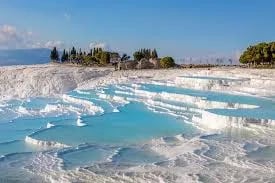



A first-time visitor once described stepping onto Pamukkale’s white travertine terraces as “walking on a frozen cloud.” That mix of childlike wonder and scholarly curiosity captures what many travelers hope to find: natural spectacle, ancient ruins and a little bit of pampering. This short guide—written from an educational third-person perspective—maps the essentials: what to see, why a Destination Management Company (DMC) can change the visit, wellness and offbeat stops, plus 2026 booking tips and digital tools to streamline the journey.
Pamukkale’s Natural & Historical Wonders
White Travertine Terraces: The “Cotton Castle”
Pamukkale is a UNESCO World Heritage site famous for its white travertine terraces, formed by mineral-rich water flowing down the hillside and leaving bright calcium deposits. These terraces are highly photogenic, but also fragile, so visitors are asked to follow marked paths and remove shoes when walking on the formations. For the best light and fewer crowds, many travelers plan terrace time in the early morning or late afternoon.
Dr. Ayşe Demir, Cultural Heritage Specialist: "Pamukkale is where geology and human history meet; preserving the terraces while allowing meaningful visitor experiences is the core challenge."
Pamukkale Thermal Pools and Wellness Traditions
The area’s Pamukkale thermal pools are known for warm, mineral waters that many visitors associate with relaxation and wellness. A top stop is Cleopatra’s Antique Pool, where guests can swim among ancient stone columns in a historic setting. Because entry rules and water levels can change by season, many 2025–2026 itineraries bundle tickets and timing into 1–3 day trips to reduce waiting and maximize pool time.
Hierapolis Ancient City: Greco-Roman Layers
Right above the terraces sits the Hierapolis ancient city, often visited on the same day. This Greco-Roman site includes a grand Roman theater, bath complexes, temples, and a vast necropolis that shows how important Hierapolis once was as a spa and pilgrimage center. The Pamukkale Museum adds context with statues, inscriptions, and finds from local excavations.
Must-Do Experiences (Best for Photos and Comfort)
- Walk barefoot across the travertines at sunrise or sunset for softer light.
- Bathe in Cleopatra’s Antique Pool for a classic thermal experience.
- Consider a hot air balloon ride (often sold as a premium package with transfers/breakfast) for aerial views of terraces and ruins.
Nearby Add-Ons Often Included in 1–3 Day Plans
- Laodicea (about 10 km away): major ruins and early Christian history.
- Karahayit: red thermal springs for a different mineral-water experience.
- Kaklik Cave and Gözler Lavender Gardens: quieter, scenic alternatives.
Why Use a Destination Management Company (DMC) in Pamukkale
Pamukkale, known as the “Cotton Castle,” combines bright white travertine terraces, thermal waters, and the ancient city of Hierapolis in one compact area. Because there are many sites, timed entry points, and walking rules (such as barefoot access on the terraces), Pamukkale destination management services help visitors see more with less stress and fewer mistakes.
Local expertise that adds meaning (not just photos)
A DMC provides skilled local guides who explain the geology behind the terraces, local traditions, and the layered history of Hierapolis beyond headline facts. This turns a simple walk into a clear story of how the landscape formed and why the ruins matter. DMC-led guides also suggest quieter viewpoints and less-crowded times, adding “off-the-beaten-path” options that many travelers miss.
Mehmet Yildiz, DMC Director: "A local DMC bridges logistics and storytelling—turning visits into curated experiences rather than rushed checklists."
Pamukkale travel logistics handled end-to-end
Planning Pamukkale often involves transfers from Denizli Airport, hotel coordination, ticket lines, and route choices between the terraces, the Antique Pool (Cleopatra’s Pool), the theater, and the museum. A DMC manages Pamukkale travel logistics so travelers can focus on the experience.
- Airport and hotel pickup
- Accommodation booking support
- Local transportation in private cars or air-conditioned buses
- Entry tickets and time-efficient routing (skip-the-line where possible)
Private Pamukkale tours, group support, and added value
Many DMCs offer private Pamukkale tours and small-group options, which are ideal for families, friends, or corporate teams that need smooth timing and comfort. Value-added services often include 24/7 support, vetted drivers, and safety standards that improve reliability—especially for early hot air balloon departures or late arrivals.
DMCs may also arrange exclusive experiences, such as private-style Hierapolis visits or access to less-frequented thermal pools when conditions allow. Contrary to common assumptions, bundled DMC packages can be cost-effective compared with piecemeal planning, thanks to combined pricing on tickets, hotels, and transport. Travelers can also compare reviews and inclusions on platforms like GetYourGuide, Expedia, TripAdvisor, and TripRadar.
Tailored Itineraries, Exclusive Access & Sample Plans
Pamukkale has many “must-sees” packed into a small area, so a Destination Management Company (DMC) often builds a Pamukkale travel itinerary around the guest’s pace and priorities. History-focused travelers usually get more time inside Hierapolis Ancient City (the theater, necropolis, and baths), while wellness seekers may spend longer at the travertine pools, the Antique Pool (Cleopatra’s Pool), and nearby Karahayit red springs. DMCs also handle tickets, transfers, and timing, which is especially helpful during peak hours.
How DMCs Customize Pamukkale Tours and Trips
- History-first: extended Hierapolis guiding, museum stop, and quieter entry times.
- Wellness-first: longer thermal sessions, spa-friendly hotels, and Karahayit add-ons.
- Photo-first: sunrise terrace walk, best viewpoints, and balloon scheduling support.
- Family or group: shorter walking blocks, private vehicle, and flexible meal breaks.
Exclusive Access & Premium Bundles (2025–2026)
Many 2025–2026 listings highlight 1–3 day formats and premium bundles. High-demand upgrades often include hot air balloon + transfers + breakfast (sometimes lunch), plus small-group or private guiding. Some DMCs can also arrange early-morning or low-crowd access windows, secluded thermal spots, and private group events.
Leyla Tekin, Experience Designer: “A two-day tailored stay often unveils the slow, restorative side of Pamukkale that one-day tours miss.”
Sample Pamukkale Day Trips & Short Stays
| Length | Best for | Sample plan |
|---|---|---|
| 1 Day (Highlights) | First-timers | Travertine terraces (barefoot walk) + Hierapolis guided loop + Cleopatra’s Pool |
| 2 Days (Wellness + Ruins) | Relaxed pace | Day 1: terraces + Hierapolis Day 2: Karahayit springs + Laodicea ruins + long thermal time |
| Multi-day combo | Big Turkey routes | Pamukkale + Ephesus (common) or Pamukkale + Cappadocia (flight/transfer arranged) |
For 2025–2026, Pamukkale tours and trips are frequently sold as day trips from Antalya, Izmir, and Istanbul, with clear choices between private (more comfort and control) and small-group (lower cost) formats.
Wellness, Nature & Offbeat Stops
Thermal wellness: Cleopatra thermal pool and Karahayit thermal springs
For a classic soak, many visitors choose the Cleopatra thermal pool (also called the Antique Pool). Warm, mineral-rich water flows around submerged ancient columns, creating a rare mix of wellness and archaeology. Local legend connects the pool to Cleopatra, and the setting helps travelers understand why Hierapolis was once a major spa city.
For a different look and feel, the Karahayit thermal springs offer a striking contrast to Pamukkale’s white terraces. Karahayit is known for red travertine and a different mineral profile, making it a popular nearby wellness stop for travelers who want variety in their thermal experiences.
Elif Kaya, Spa Historian: "The mineral signature of Pamukkale’s pools differs subtly from Karahayit’s red springs—each offers a distinct therapeutic feel."
Nature breaks: Pamukkale nature park and quiet landscapes
Pamukkale nature park is a simple way to slow the pace after the terraces and ruins. It has easy walking paths, shaded areas, and calm viewpoints that highlight how Pamukkale combines cultural sites with nearby nature. It also works well for families and travelers who prefer gentle outdoor time over long archaeological walks.
For more offbeat nature, Kaklik Cave provides a cooler, underground setting with mineral formations that echo Pamukkale’s geology in a smaller, less crowded space. Gözler Lavender Gardens adds a soft, rural contrast—especially in season—ideal for quiet photos and a short countryside stop.
Offbeat activities: air, adrenaline, and village life
- Sunrise hot air balloon rides for wide views of the terraces and surrounding fields.
- Paragliding for travelers who want a faster, more adventurous perspective.
- Pamukkale Village for local cafes, small handicrafts, and regional Turkish dishes.
Small but valuable: Pamukkale Museum
The Pamukkale Museum helps visitors connect the Hierapolis ruins to real daily life by displaying artifacts found on site. It is especially useful for travelers who want clearer context before or after exploring the ancient city.
Practical Tips, 2026 Trends & Digital Tools
Pamukkale travel tips: timing, comfort, and preservation
Pamukkale’s white travertines are fragile, so visitors should walk barefoot only in the permitted areas and follow on-site routes to protect the terraces. For the best light and fewer crowds, a Pamukkale travel guide 2026 should recommend arriving early morning or late afternoon, when the pools look more photogenic and the heat is softer. Planning extra time also helps: combining the terraces with Hierapolis and the Antique Pool often takes longer than expected, especially in peak season.
Booking in 2026: bundled value and review-led choices
Current 2026 travel behavior is shifting toward multi-day stays and bundled experiences rather than quick stopovers. This is where Pamukkale travel packages arranged by a Destination Management Company (DMC) can be practical, because transport, tickets, and timing are coordinated in one plan. Many travelers still compare options on OTAs before confirming, so checking GetYourGuide, TripAdvisor, TourRadar, and Expedia for up-to-date availability, seasonal notes, and recent reviews is now a standard step. Searches often perform better using the regional tag Denizli Pamukkale Turkey, especially when comparing day trips routed from Antalya, Marmaris, Kuşadası, İzmir, or Istanbul.
Digital tools that make planning easier
Modern travel platforms support smoother planning by offering Log In/Register features that save favorites, traveler details, and mobile tickets for quick entry on day trips. Geolocation can suggest nearby thermal pools, museums, and dining based on where the traveler is staying, while search and filters help match priorities such as luxury hotels, wellness services, family-friendly transport, or group travel needs. Social sharing and direct links also make it easier for groups to agree on the same itinerary and meeting points.
Burak Şahin, Travel Tech Analyst: "Smart booking uses geolocation and filters to tailor Pamukkale suggestions—saving time and aligning itineraries with traveler priorities."
Overall, the best Pamukkale travel tips for 2026 focus on respectful visiting, smart timing, and digital-first planning. With review-led booking and well-designed tools, travelers can build longer, calmer itineraries that balance the Cotton Castle’s natural beauty with the depth of Hierapolis and the region’s wellness culture.
.jpg&w=256&q=75)